Exploring AI
as a creative medium.


Compass explores how our perception of possibility changes with our inner experience, and how creating a little more space can help us reconnect with choice.


An AI short film concept that reimagines Plato’s Allegory of the Cave, exploring awakening, perception, and collective reality.
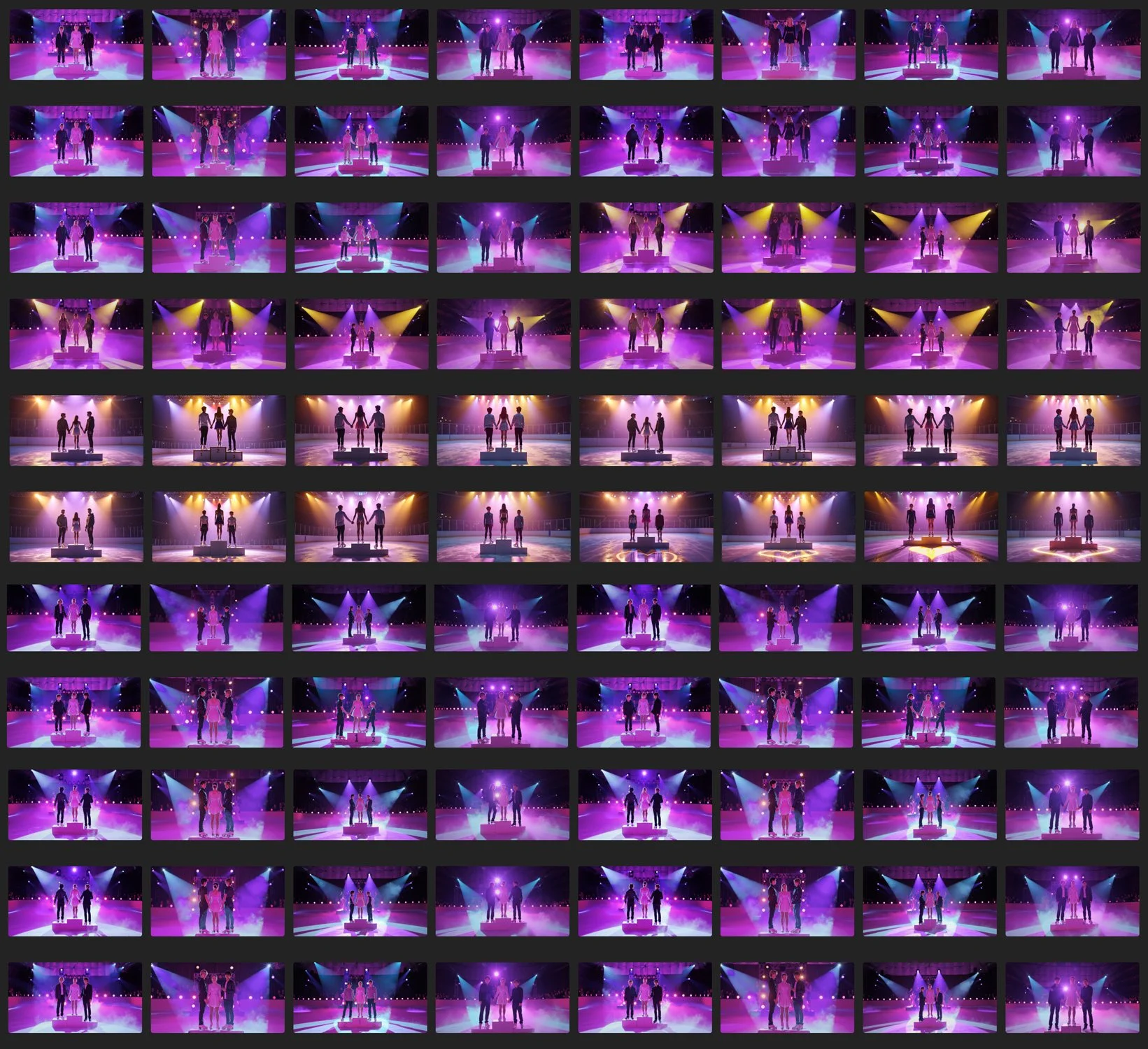
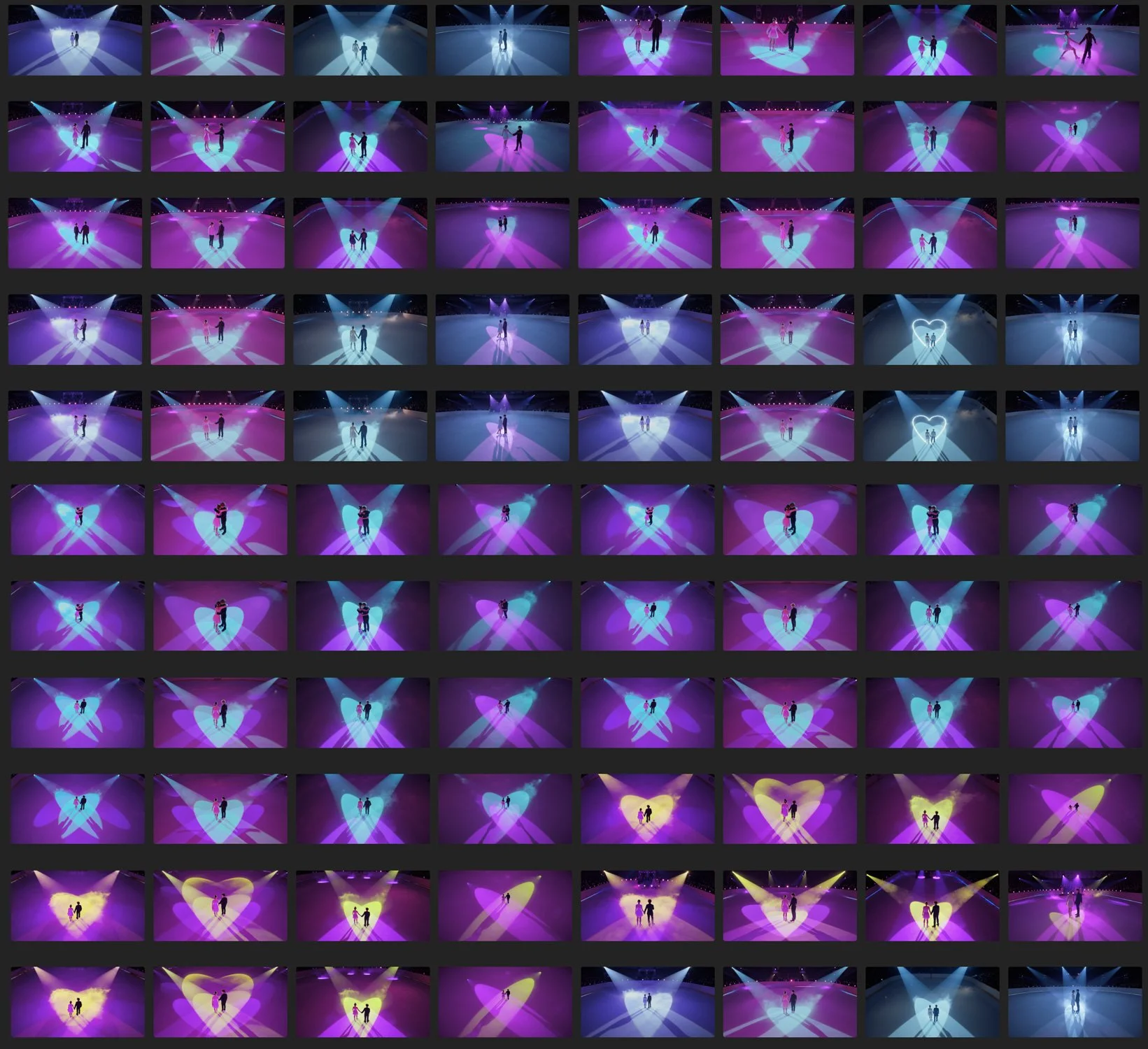
Commercial Workflow
Generative tools function as a full production medium — supporting concepting, iteration, compositing, and release.
A system for navigating inner experience.
“You cannot choose what you cannot see.”
That simple insight became the beginning of Compass. It led me to a question that stayed with me for years: why is it that when we’re anxious, angry, or overwhelmed, choices that once felt obvious suddenly seem out of reach? Where do those possibilities go? Why does our emotional state seem to shape our sense of what is possible in any given moment?
Through more than seven years of self-inquiry, that question evolved into a visual system for understanding how inner experience unfolds—how our perception of possibility expands and contracts with our current capacity, and how creating just a little more space can help us reconnect with choice.
Today, Compass is evolving into an interactive product experience that uses visual systems, storytelling, and AI-assisted guidance to help people orient themselves within uncertainty and reconnect with their capacity to choose.
















Q & A
-
Within Compass, AI functions less like an authority and more like a guide. Its purpose is to help people navigate their experience, notice what may be asking for attention, and reconnect with their own sense of orientation.
When people experience overwhelm, anxiety, or contraction, their access to choice often narrows. Certain possibilities become difficult to see, even when they remain available. In these moments, the AI acts as a form of scaffolding — helping hold open perspectives, questions, and options that might otherwise fall outside immediate awareness.
The intention is not to direct the traveler. It is to support them in remembering their own capacity to choose.
-
The question assumes that clarity is something we create. Clarity is something that emerges when the conditions are appropriate. Much like seeing the sun once the clouds have passed, clarity is not a doing. It is a consequence.
Thoughts, emotions, sensations, and competing narratives naturally arise within experience. Attempts to force clarity often add another layer of interference. Instead, Compass focuses on helping what is present settle, one moment at a time, according to a person’s capacity.
The goal is not to reduce complexity. The goal is to relate to complexity in a way that allows its underlying structure to become visible. When enough settles, clarity often appears on its own.
Not because it was created, but because it was revealed.
-
Inner experience is difficult to navigate because it is often felt before it is understood.
Most people can recognize that they feel overwhelmed, lost, stuck, activated, disconnected, or uncertain, but those experiences often lack shape and orientation.
Compass attempts to solve this by translating qualitative experience into landscapes, pathways, and visual systems. The goal is not to diagnose or explain the experience, but to provide orientation within it.
A map does not eliminate uncertainty. It simply helps someone understand where they are in relation to where they might go next.
-
Reflection often remains passive. People notice patterns, insights, and emotions, but struggle to convert them into meaningful action.
Compass treats reflection as a navigational act rather than a purely analytical one. Every insight becomes a potential movement: a shift in terrain, a change in capacity, a new choice point, or a return to the Field.
The objective is not to think more about experience, but to develop a relationship with it.
-
Most systems attempt to solve uncertainty by providing answers. Compass begins with a different assumption: people are not usually lacking answers — they are lacking orientation. The challenge is not that someone doesn't know what to do. It's that they've become disconnected from the conditions that allow genuine choice to emerge.
When people feel lost, overwhelmed, activated, or disconnected, the instinct is often to seek direction from outside themselves — advice, frameworks, experts, certainty. Sometimes those things help. But they can also create a subtle dependency, where guidance gradually replaces self-trust.
Compass attempts something different. Rather than prescribing a destination, it focuses on improving orientation. A map doesn't tell a traveler where to go — it helps them understand where they are. Once orientation returns, choice becomes possible again. The goal isn't to remove uncertainty. It's to create enough clarity that uncertainty can be navigated consciously.
This is why Compass is built around orientation rather than instruction. Rather than prescribing a solution, it focuses on helping people recognize the conditions they are currently navigating. From that recognition, new possibilities emerge.
In this way, Compass is less interested in directing people than accompanying them. Its role isn't to provide certainty. It's to help someone remain connected to themselves long enough for their own wisdom, capacity, and agency to reappear — because the deepest forms of guidance cannot be given. They can only be remembered.

Core Engine
Notice → Allow → Orient → Choose → Reflect
Compass is built around this simple progression.
Noticing creates a small but meaningful separation between ourselves and what we’re experiencing. Rather than becoming completely identified with a thought or emotion, we begin to observe it.
From there, allowing creates space. Instead of fighting or suppressing what’s present, we gently meet the experience as it is. As resistance softens, our perspective begins to widen.
With more space comes orientation—the gradual rediscovery of where we are in relation to what is possible. Choices that once felt hidden or inaccessible begin to come into view, allowing us to respond in ways that are more aligned with our current capacity.
Choosing is the moment that possibility becomes intention. Whether expressed outwardly or held quietly within, each choice subtly shapes how we experience the moments that follow.
Reflection completes the cycle, allowing each experience to inform the next moment of awareness, becoming an opportunity to understand ourselves a little more clearly.
Signal Path
How experience moves from source, through distortion, and back toward clarity.
Influences
Seven years of journaling, self-inquiry, & iterative observation
Contemplative & Non-dual traditions
Polyvagal Theory & Nervous system regulation
Somatic psychology & Body-based awareness
Cognitive science & Perception research
Interaction & Human-centered design
Visual systems & Information architecture
Generative AI as an adaptive interface
The diagrams below describe the phenomenology behind perception.
Consequence Map
The branching points where perception becomes action and action becomes outcome.
Pre-conscious Layer
The hidden processes that shape experience before we notice them.
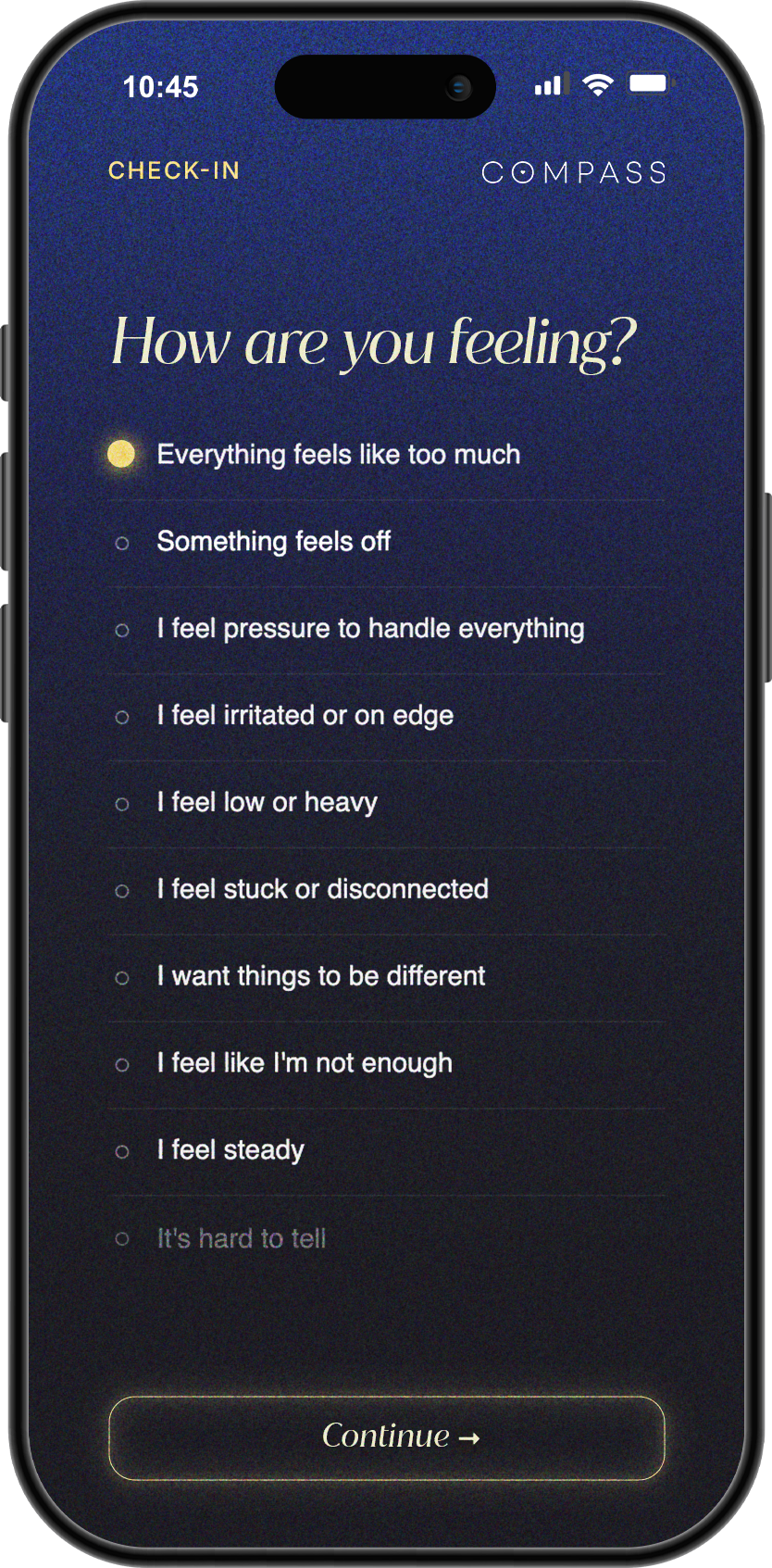
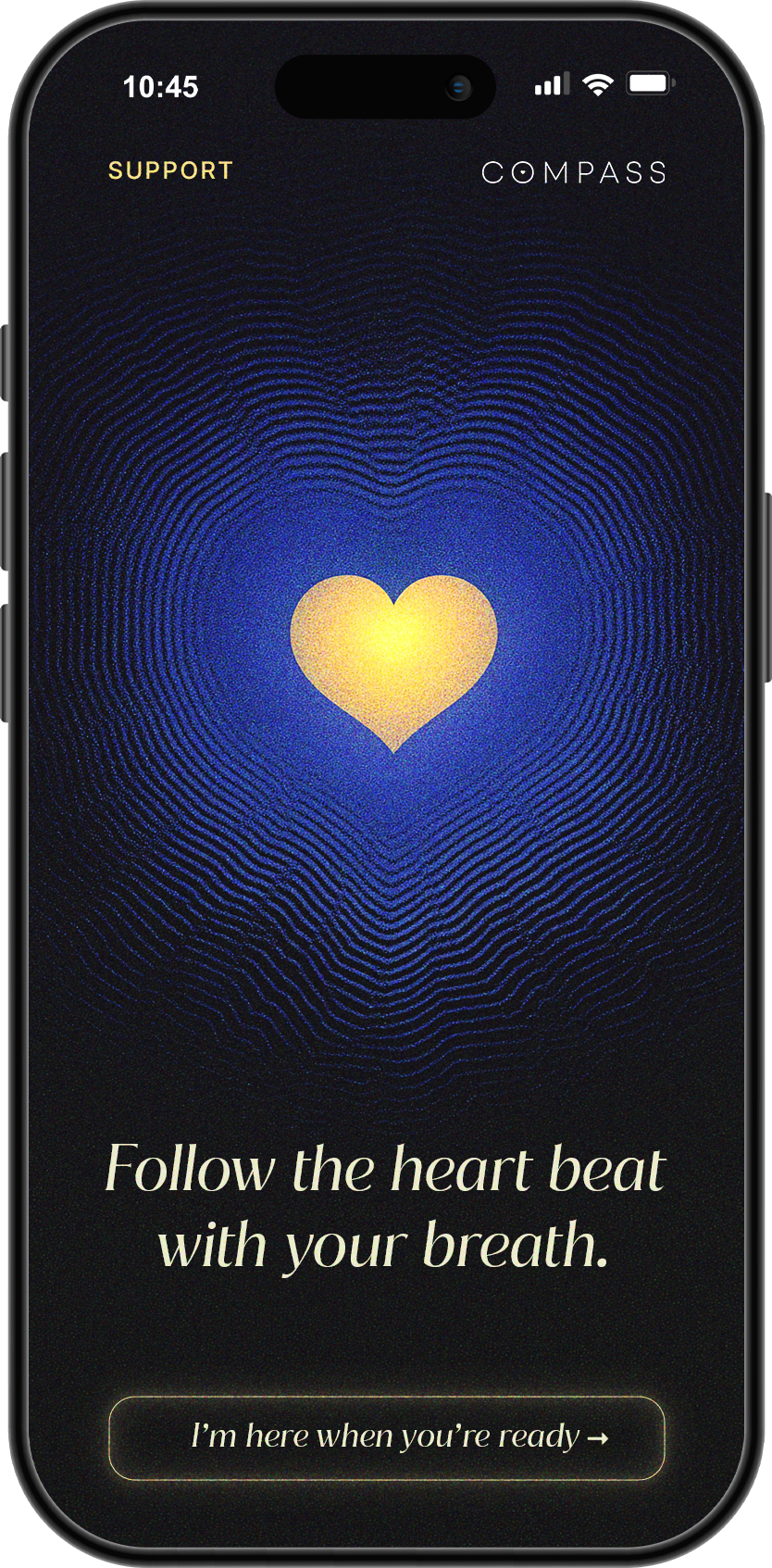
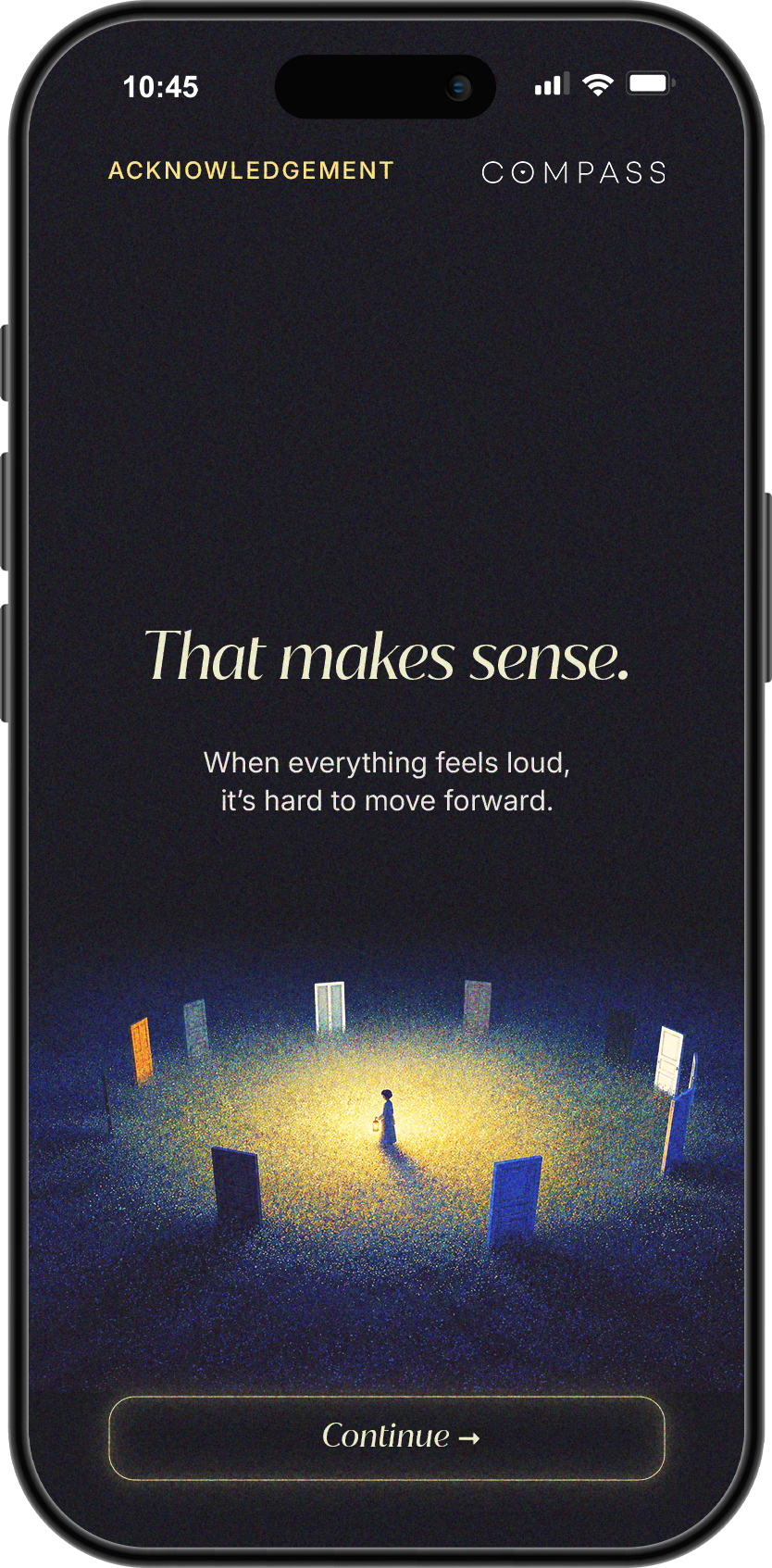
Interactive Product Experience
Compass App is a companion for moments when clear thinking feels difficult.
When people are gently supported in meeting their present experience, more capacity naturally becomes available—and with it, more freedom to choose.
App Icon
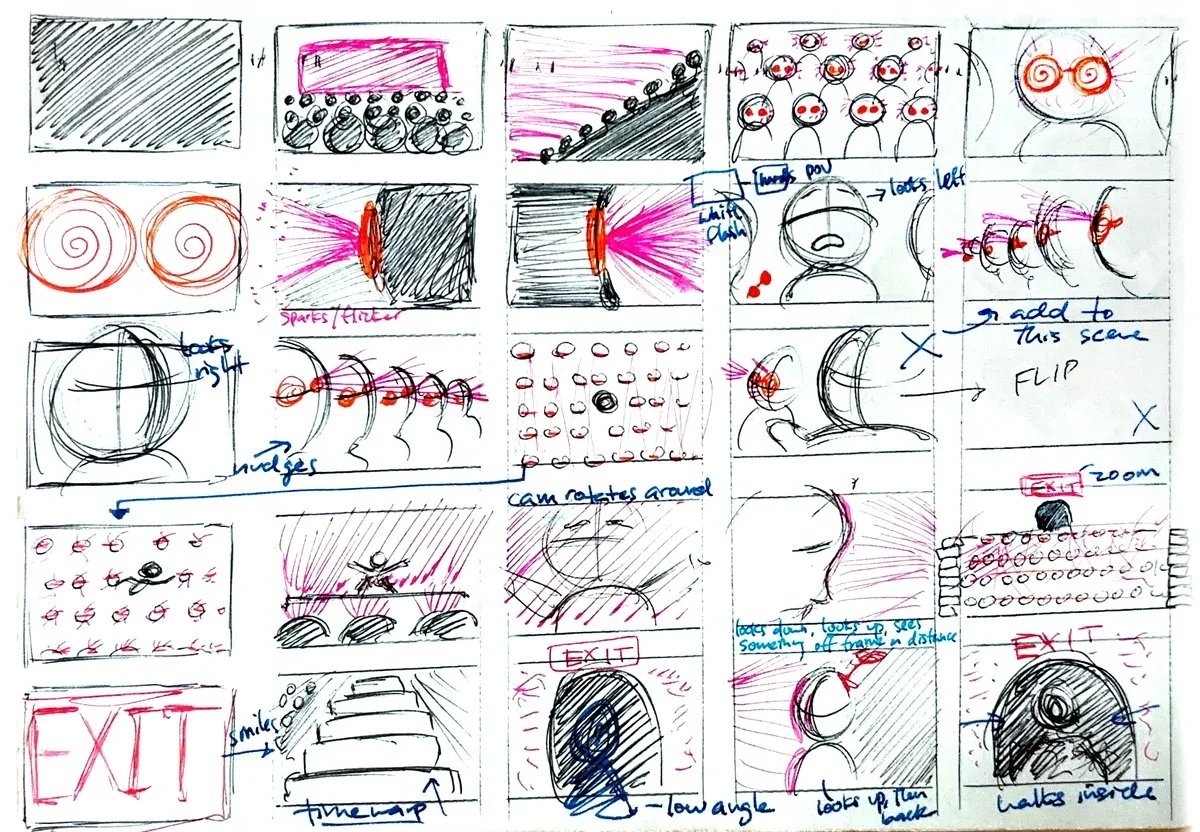
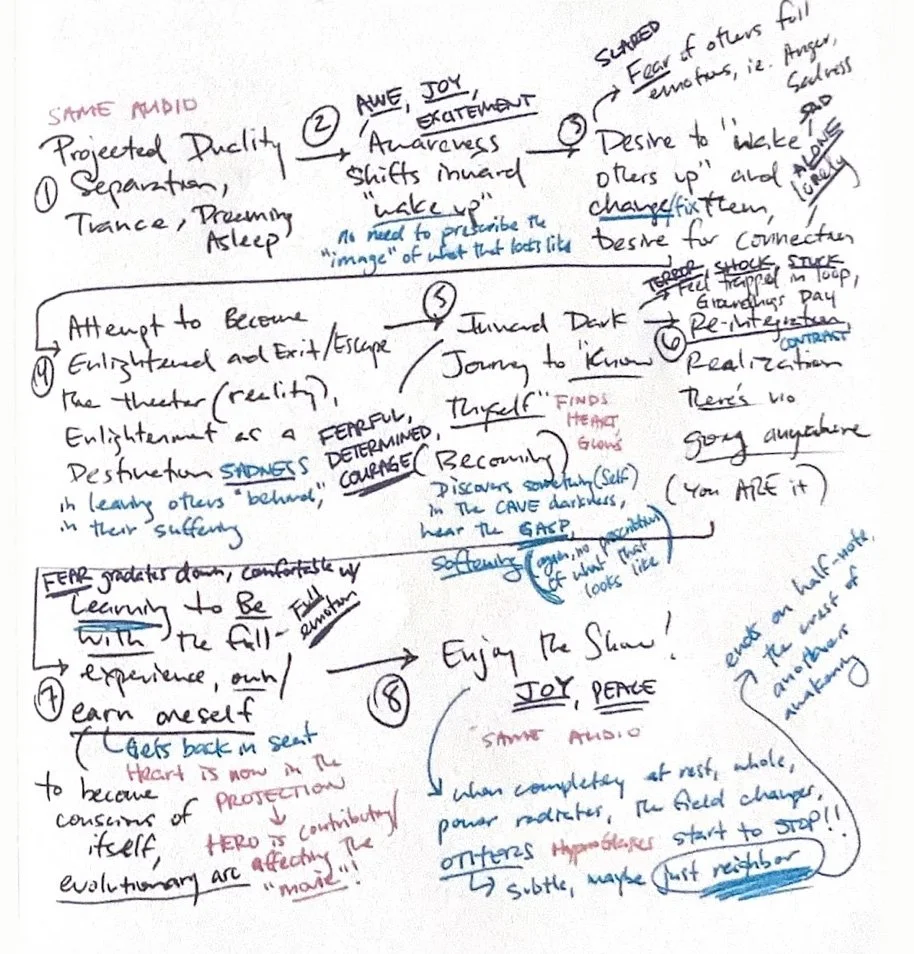
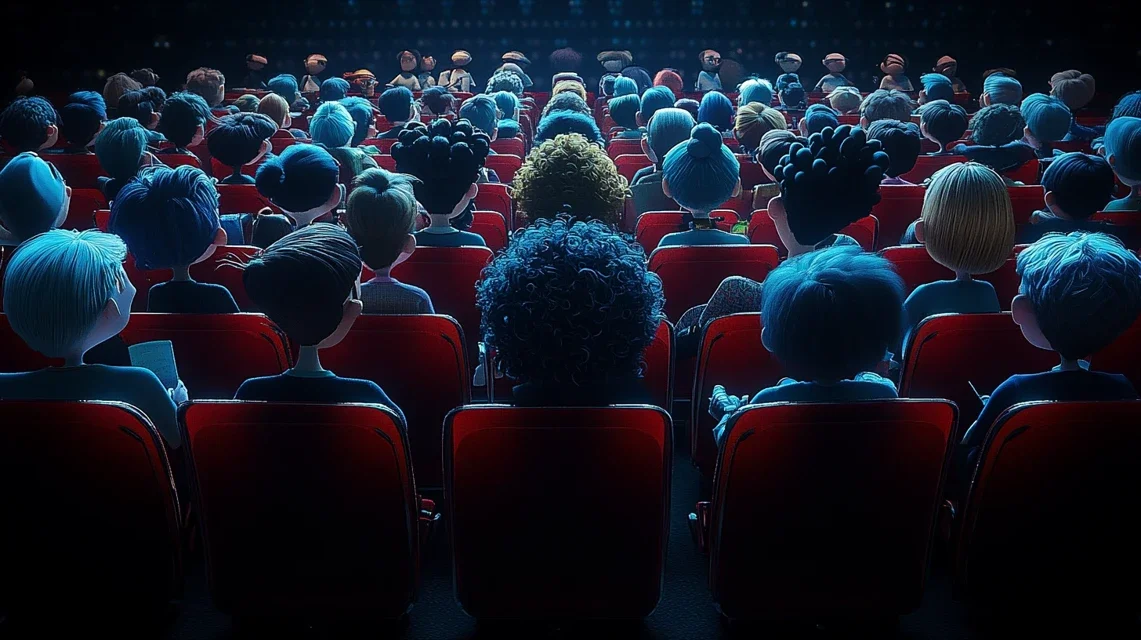
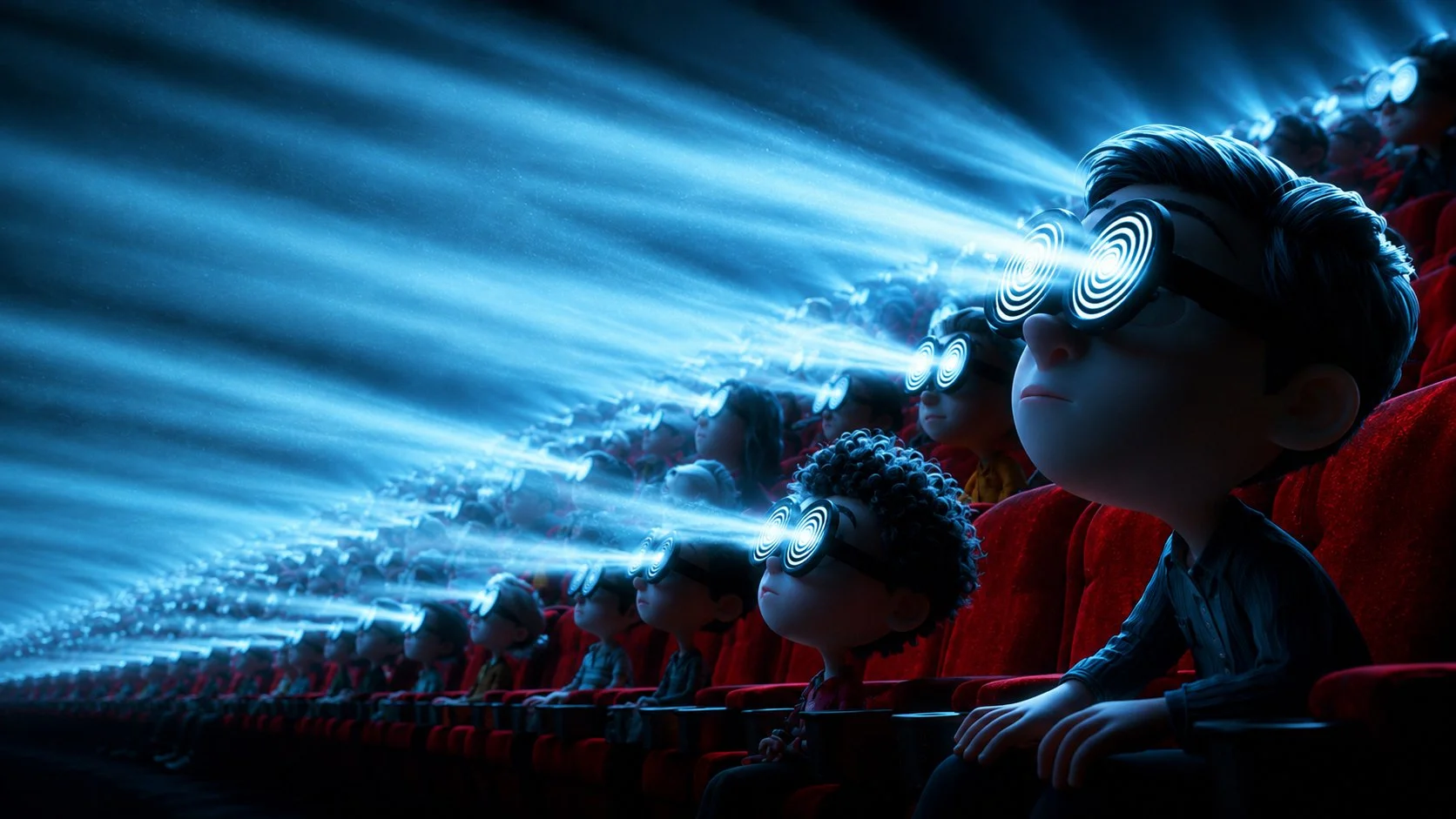
A movie theater. Hundreds of audience members wearing hypnotic glasses — each one projecting their inner experience onto the shared screen. The film they're watching is them.
One character's awareness shifts inward without warning. The trance breaks. They look around at the others — still under — and discover the first uncomfortable truth: you cannot wake someone who isn't willing. Gnosis doesn't transfer.
AI short film exploring awakening.
In search of an exit, they enter a tunnel of complete darkness. No projections. No reference points. Only the instruction to know thyself — navigated blind. The tunnel leads back to the exact same theater. There is no elsewhere to escape to.
What changes is how they take their seat. No longer projecting inner shadow onto the shared screen — something else now moves through them. The film ends with a simple message to the audience: Enjoy the show.
Projection explores perception, collective reality, and the realization that the human experience cannot be escaped but only engaged with more consciously. Developed in 2025 using generative AI tools including Midjourney and Runway Gen-3 to prototype environments, characters, and cinematic moments.

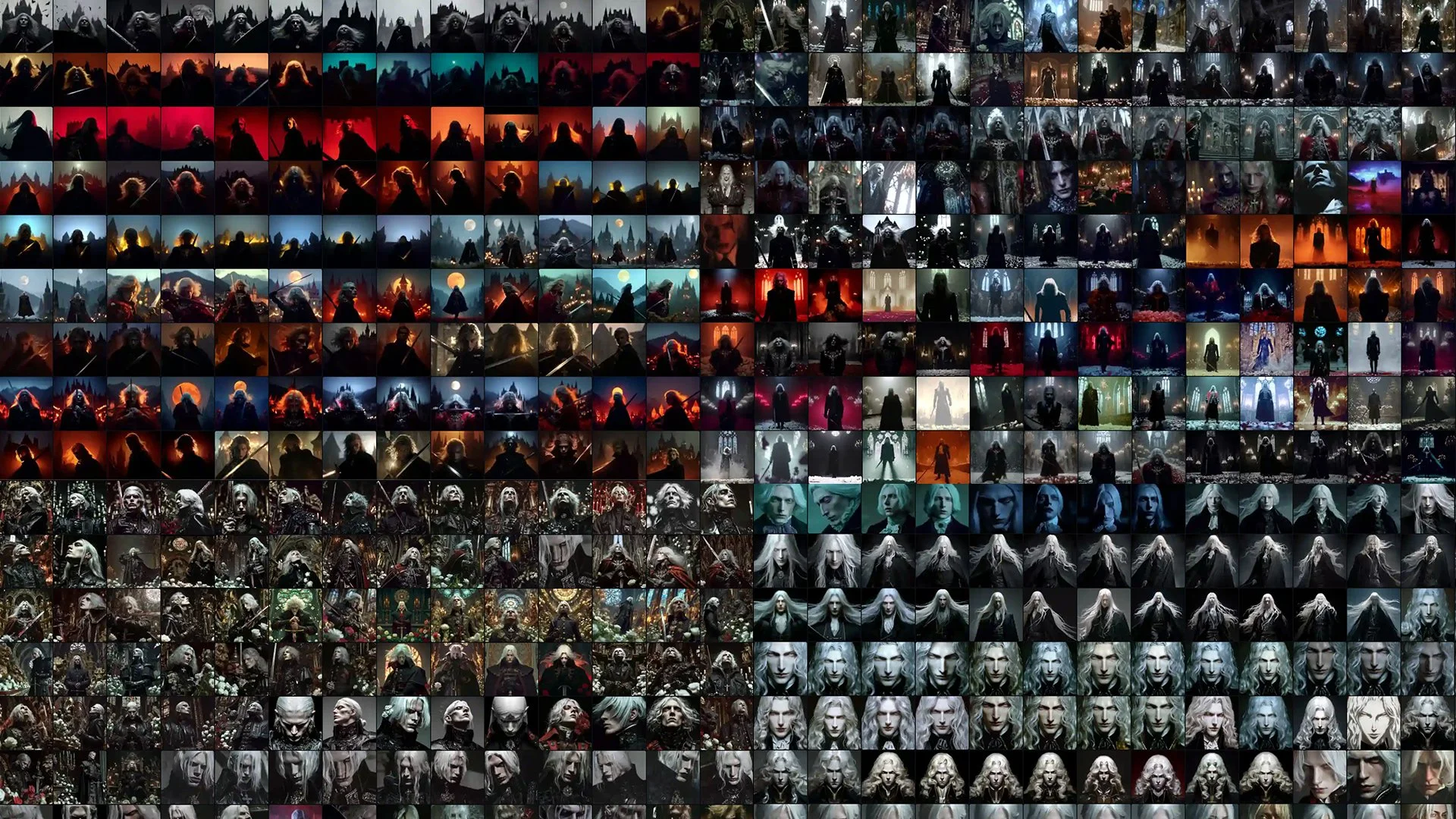
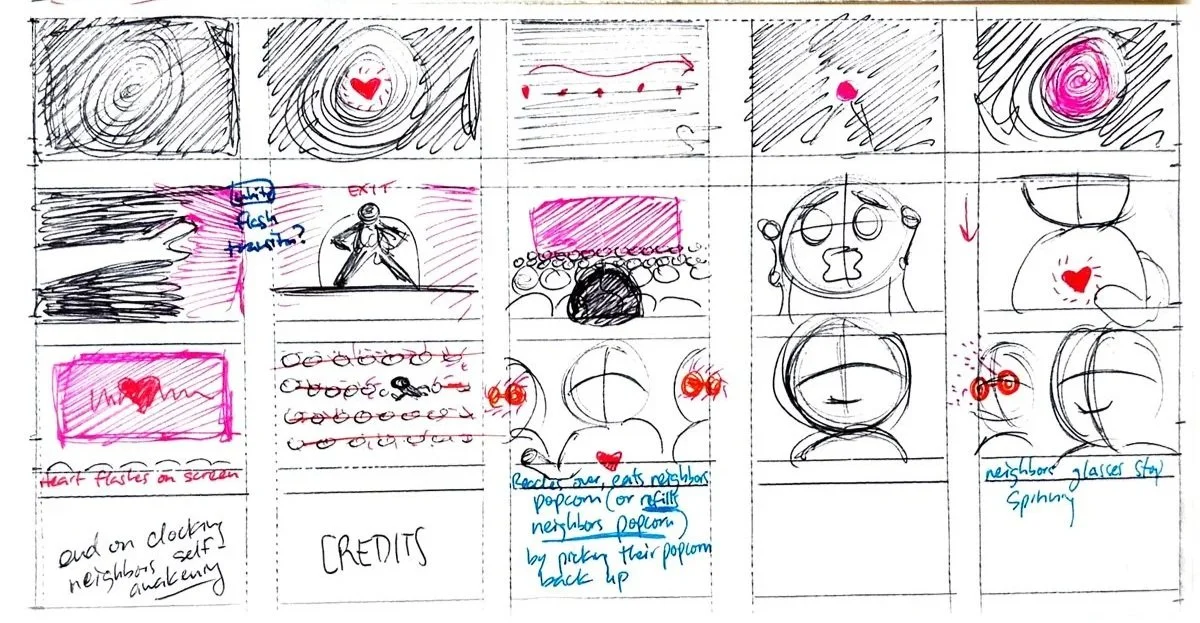
Storyboard Exploration


















Character Exploration












Commercial Workflow
Using Generative AI for prototyping and campaign development.
Generative tools are integrated into my campaign workflow to explore visual ideas and accelerate early concept development.
External models are used to prototype compositions and narrative directions during ideation, while platform-native models take the work through commercial release.
Together, these tools extend the art direction process — enabling rapid visual exploration while maintaining the craft required for large-scale campaigns.